Home › Insulation
Insulation? It's certainly our biggest speciality. Internal or external wall insulation, upgrading floors or roofs, a single room or a whole house, we'll find an ecological way that suits the building. With over 200 insulation projects behind us, the challenging ones are the ones we enjoy most.
If you have a clear idea of what you need.
Photographs of jobs like yours, from start to finish.
 AECB
AECB
 ASBP
ASBP
 Listed Property Owners Club
 The Green Register
 Passivhaus Trust
 Certified Passive House Tradesperson
“Eco-Renovation recently carried out some internal insulation works at our Victorian property, and we are very happy with the work. They were reliable, clean and tidy, and the works were done to a high standard. They were very well organised and we were kept informed of everything throughout the process. I would highly recommend them!”Sam R
We work in materials that let vapour through, such as wood fibre, cork, hemp, lime and clay, because that's what these buildings have always done and they seem happier left to carry on. Most of it is grown rather than manufactured.
Finding the most suitable method and material for your building is crucial if you want the best long-term benefit, and to avoid putting the structure at risk, which can even make the insulation work redundant.
Cement render, gypsum plaster, and foam or PIR board. We don't keep any of them on the van.
In insulation work, the hard part isn't fitting the boards. It's everything around them. To make the job work in the real world rather than just on paper, a great many details have to be thought through: keeping thermal gaps to a minimum, letting vapour move, cutting out uncontrolled air infiltration, and supporting the ventilation.
So it matters that there is a sound answer for the intermediate floor junctions, the ceiling edges, the floor to wall junctions, the socket boxes, the radiator pipes or underfloor heating, the cable runs, the window reveals and sills, and the rest of it.
We won't pretend we've seen it all - old buildings can always reveal a detail that's new to us. But with more than 200 insulation projects behind us, we've probably come across it before. What we do promise is to stick with it until we're confident we have an answer for every detail - and then get it right.
If the build-up is already decided.
If these are the questions you'd like answered, that's exactly what the survey is for.
Every element can be insulated. Which way, and with what, is the part worth thinking about.
Wrapping the outside keeps the masonry warm inside the thermal envelope, with no disruption to the rooms indoors. It's what we'd choose wherever the elevation allows it.
Whether it's possible, and which materials are most suitable, depends on a number of details worth discussing.
The details always need a thought-through design and careful execution: the window reveals and thermal bridging, the junction with the roof and the soffit, the cables and outside fittings, the garden tap, the waste pipes, and so on. The aim is always the same - insulation continuity, with as little compromise as possible.
See our external wall insulation projects →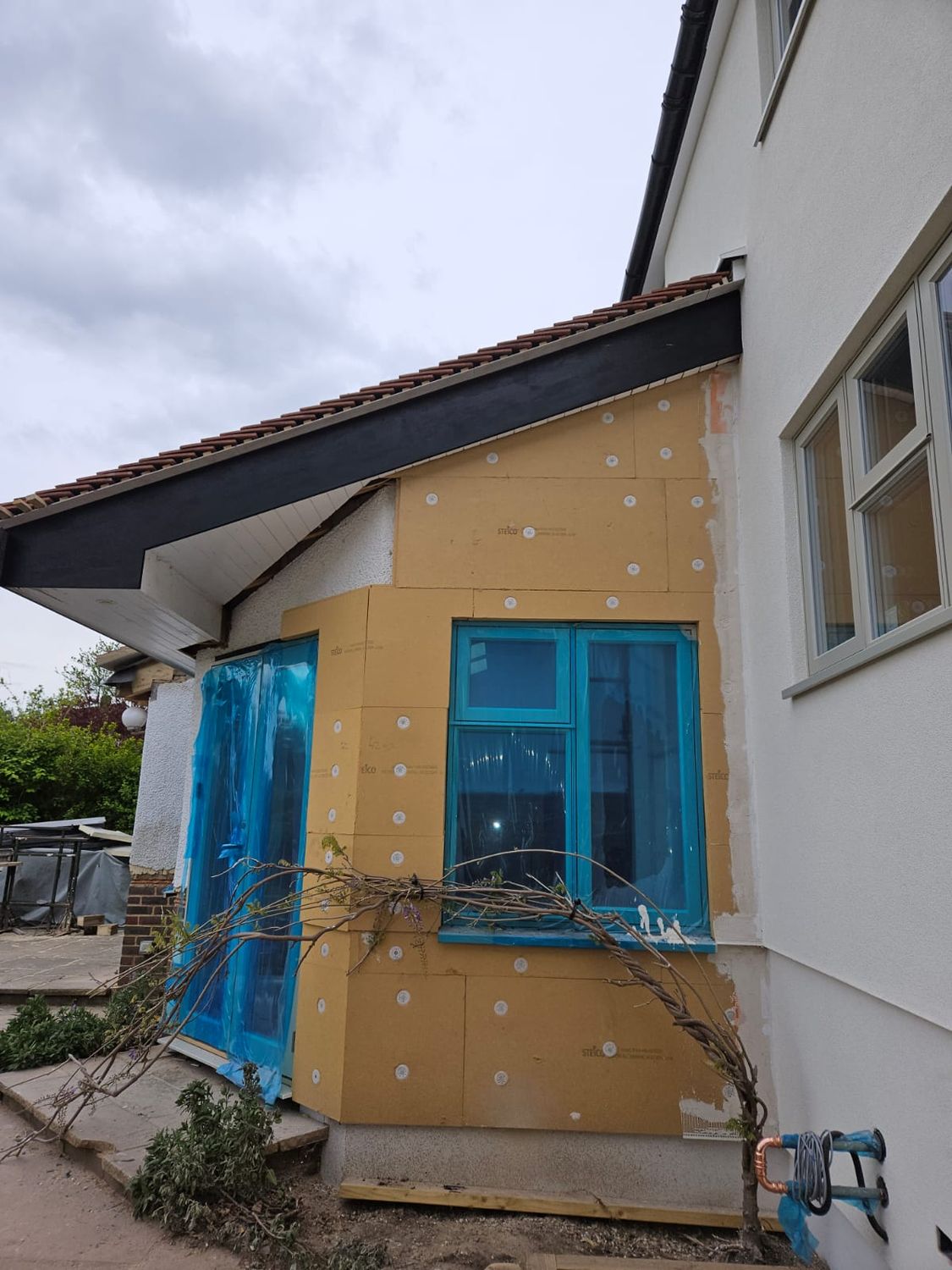
We use internal wall insulation when external wall insulation isn't an option, or when the house is undergoing internal changes or an overhaul that affects the walls and plaster anyway.
Which material suits best depends on a number of factors: how even the wall is, how much of the room you're willing to give up, and what happens where it meets the floor, ceiling, window reveals, sockets and radiators.
See our internal wall insulation projects →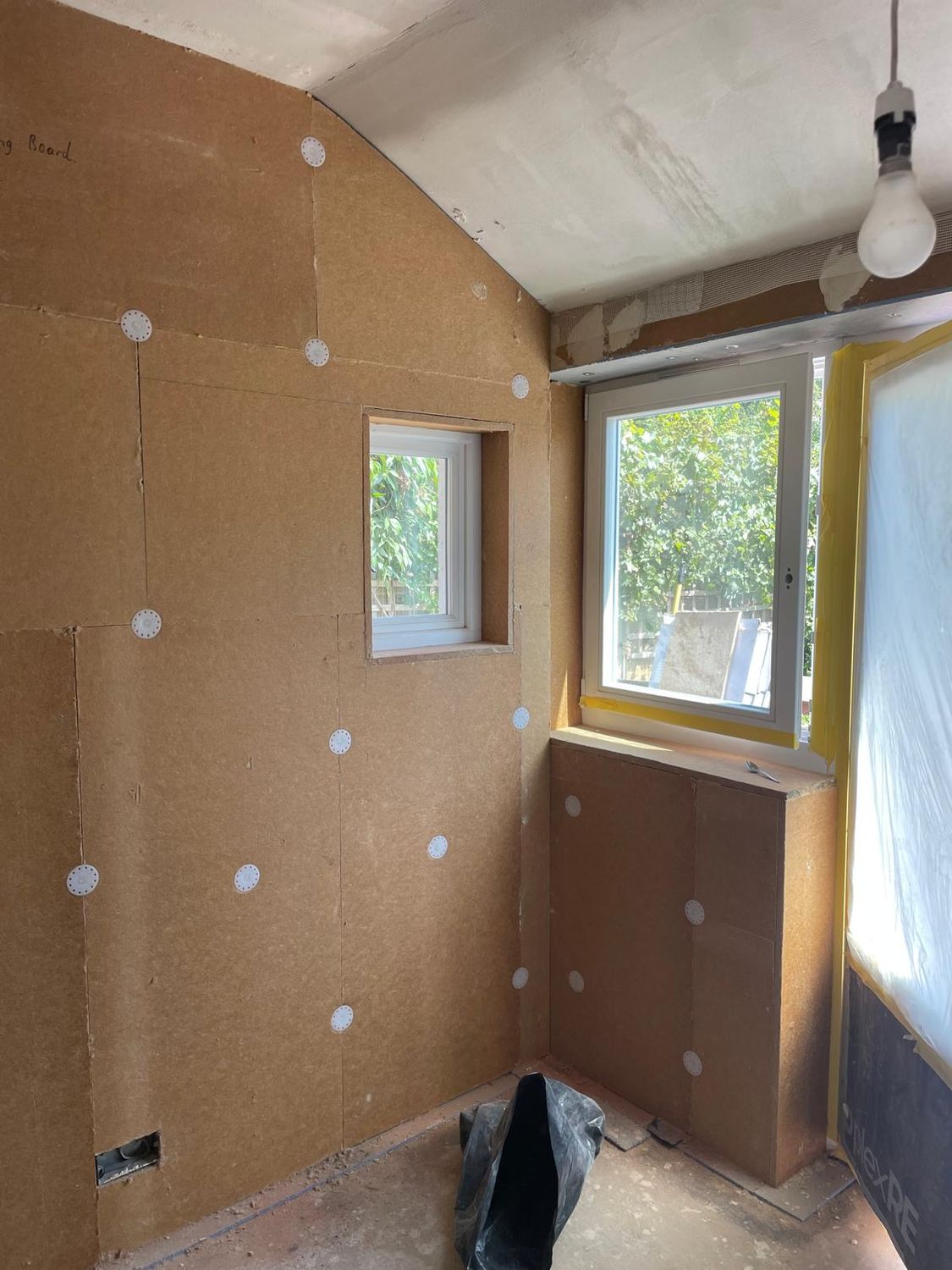
Insulating a suspended timber floor is very different from insulating a solid floor. The right build-up depends on what's already underneath, whether you want underfloor heating, and the required finished floor level - something that's rarely a free choice in an old building.
See our floor insulation projects →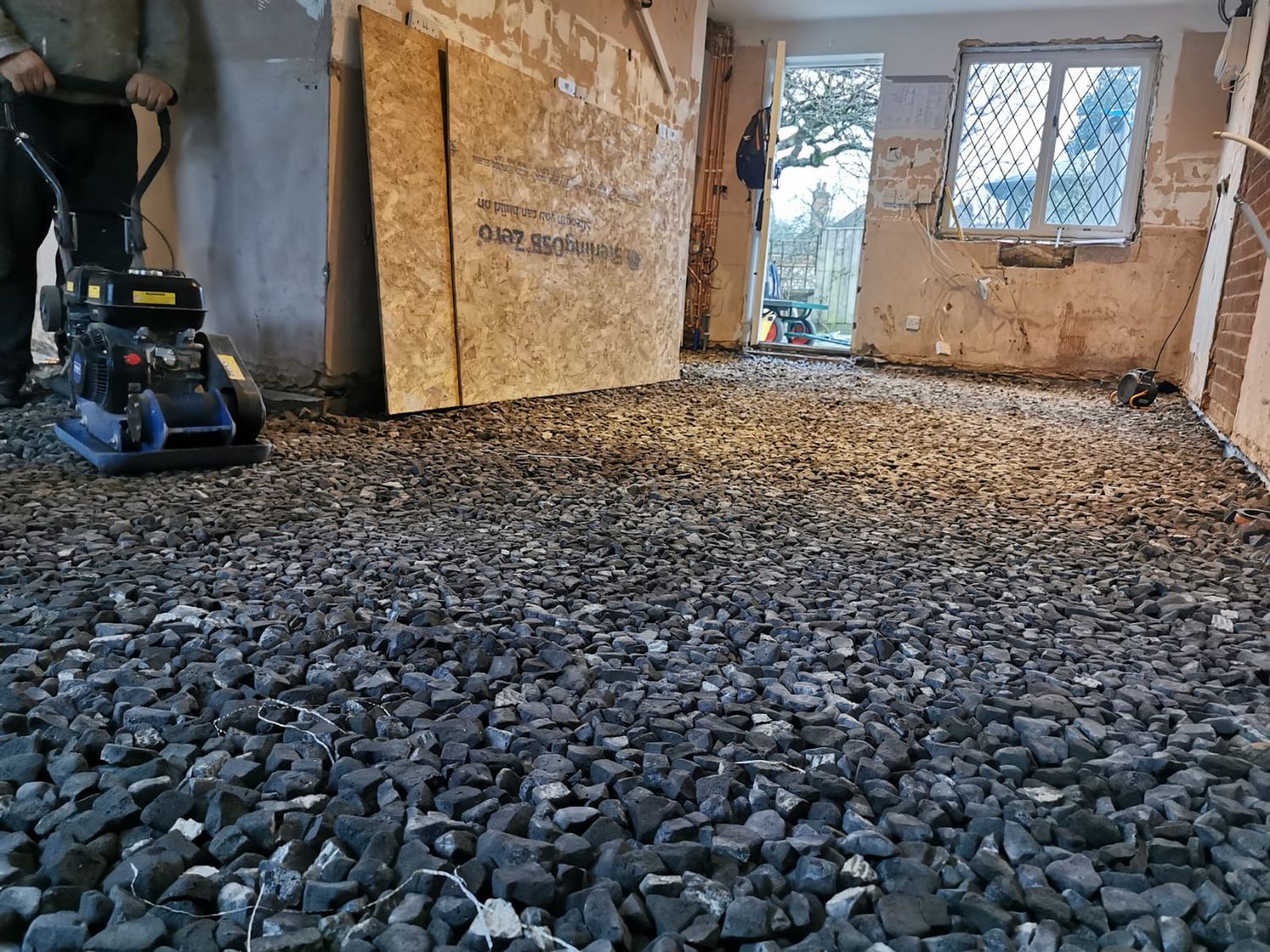
Between and under the rafters if you want the roof space warm, or at ceiling level if you don't. It makes the biggest difference of all in a heatwave, which people don't always expect.
The right build-up and the most suitable materials depend on a few details, like how the roof is ventilated, what the rafters will take, and what the internal finish will be.
See our roof insulation projects →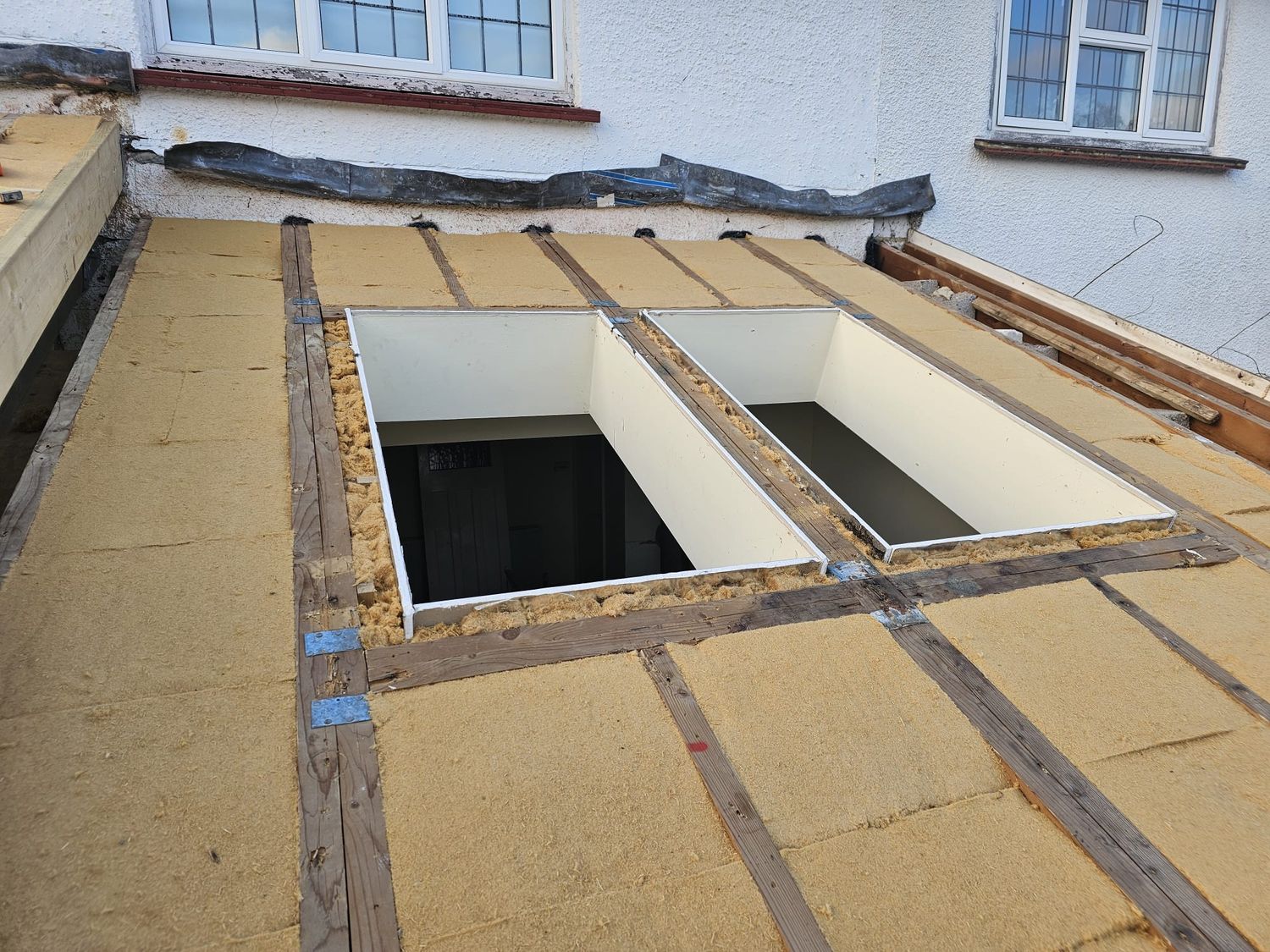
Four we come back to again and again, and why.
A lime, clay and cork insulating plaster that goes on wet, so it finds its way into every hollow of an uneven wall and leaves nothing behind it. It works inside or out, sprayed or by hand, and it's thin for what it does, which is why it's often the solution where space is tight.
We've been using it for over a decade and we're approved installers.
More about Diathonite → See Diathonite on our projects →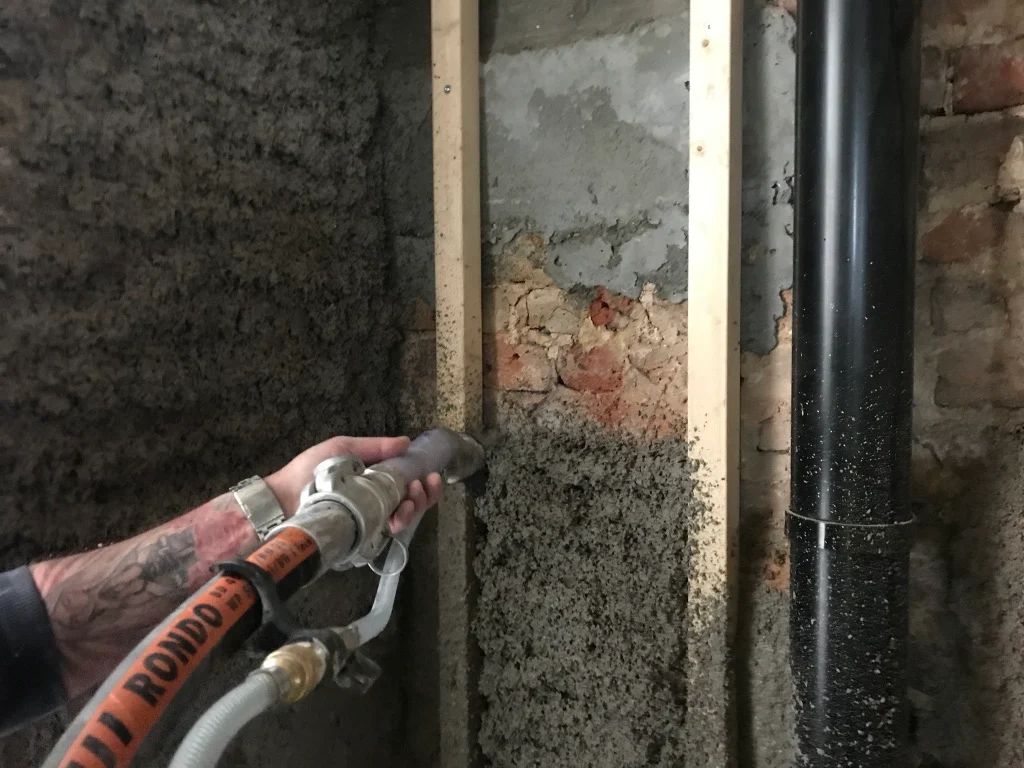
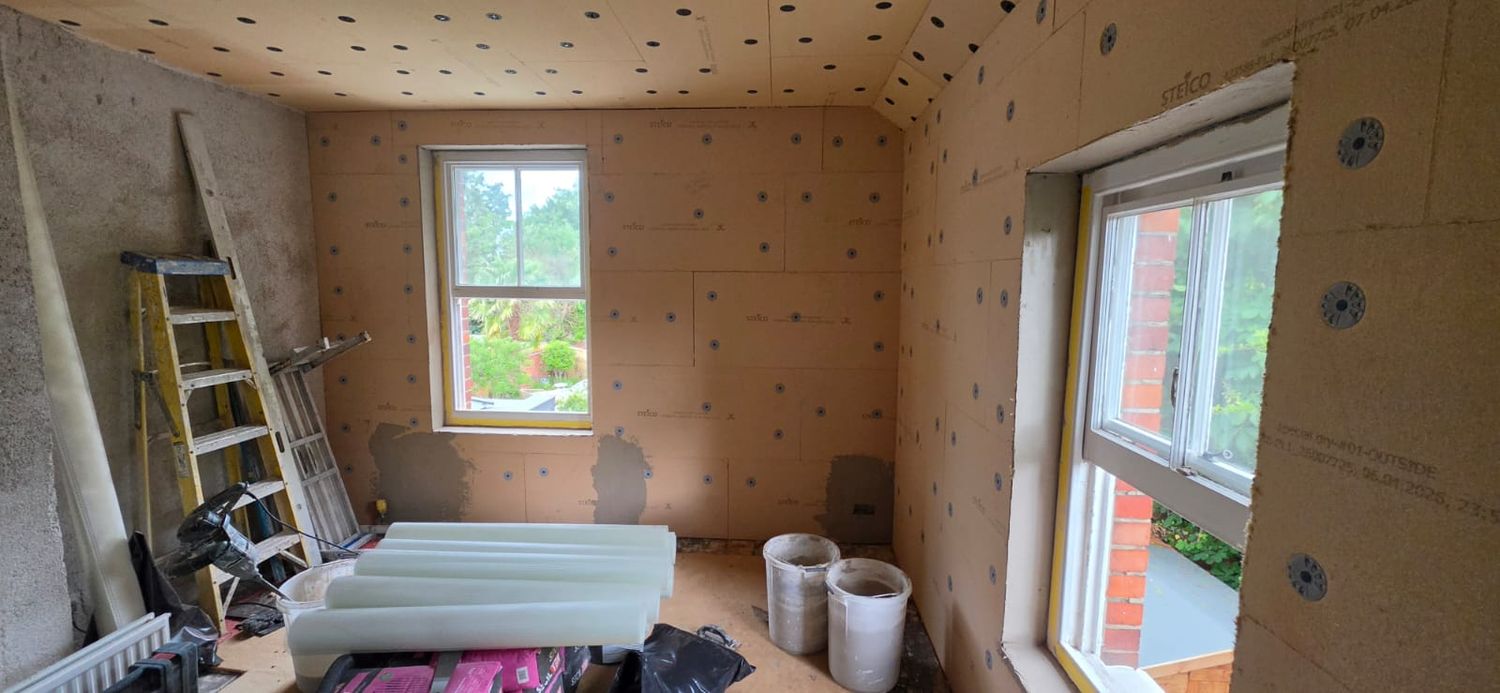
Rigid boards for walls, roofs and floors, and the build-up we'd choose where the wall is flat enough to take them and there's depth to spare. They buffer moisture rather than blocking it, and they're pleasant to work with.
The flexible version of the same material goes between joists and rafters.
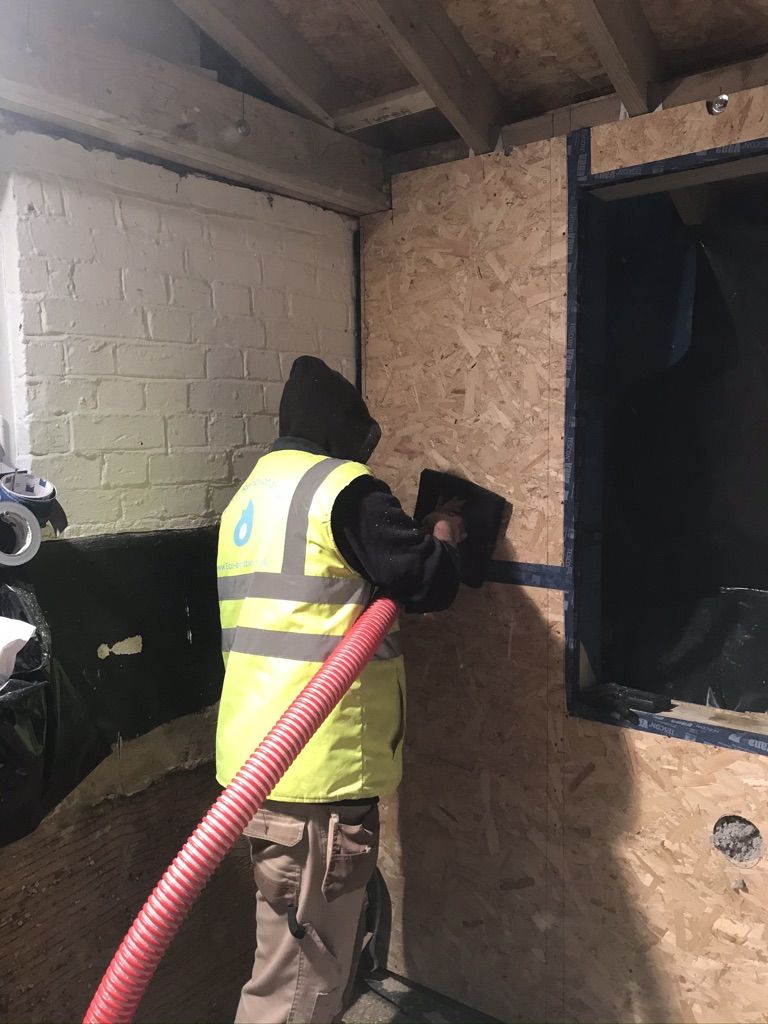
Made from recycled newspaper and blown into timber structures, so it fills awkward shapes and corners better than anything that comes in a board. Quick to install once the structure is ready.
We're approved installers with PYC.
Hemp and lime, cast around a timber frame or applied on walls. It insulates and regulates moisture well, and it locks carbon into the building rather than giving it off.
Also available in blocks, which we use for building extensions.
See our hempcrete projects →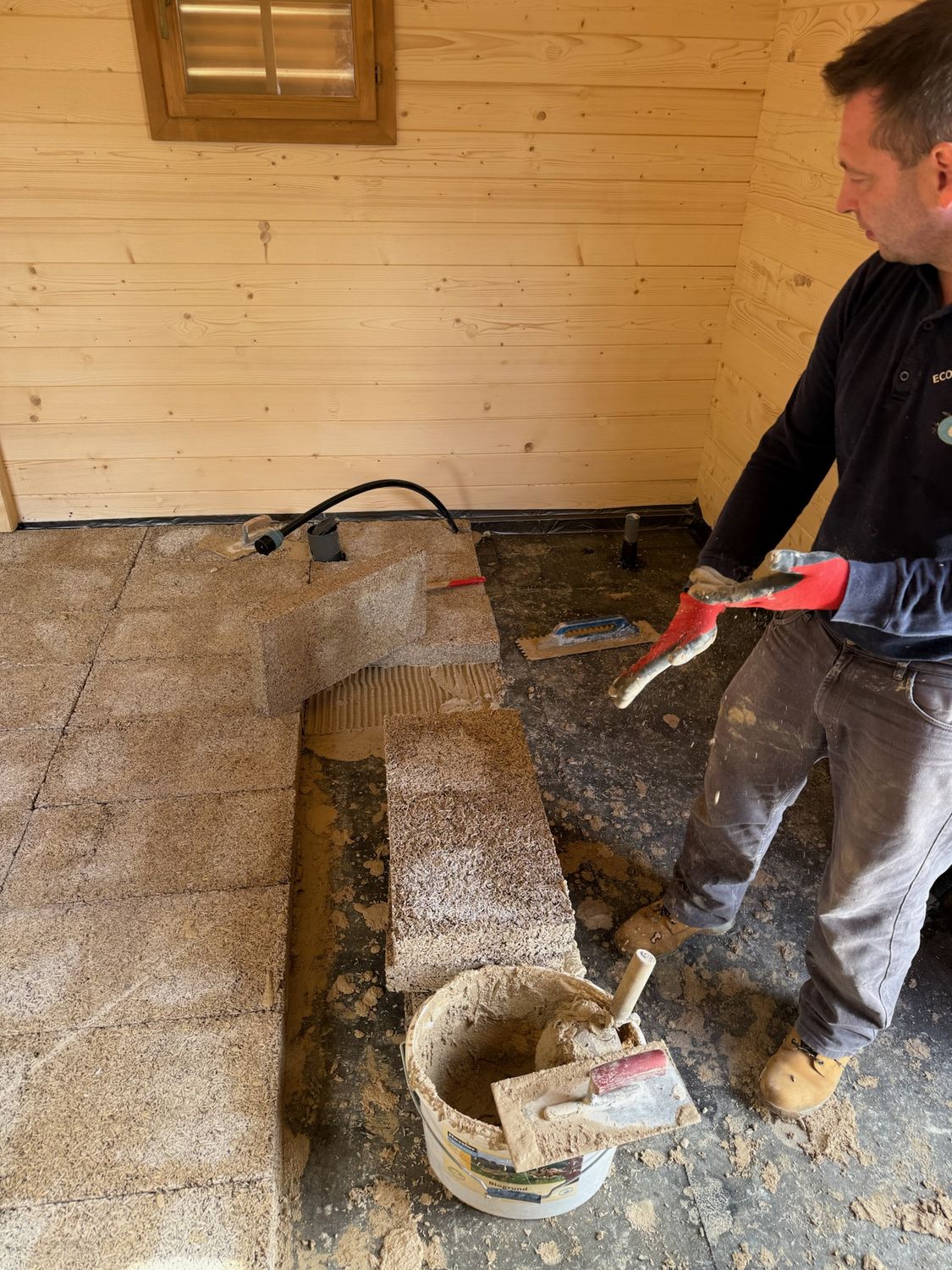
If you already know what you'd like done, send us the details and we'll price it. And if you'd rather talk it through with somebody in front of the building first, that's what the survey is for.
£180 + VAT. If the project goes ahead with us, we take it off the final cost of the work.